Monkura
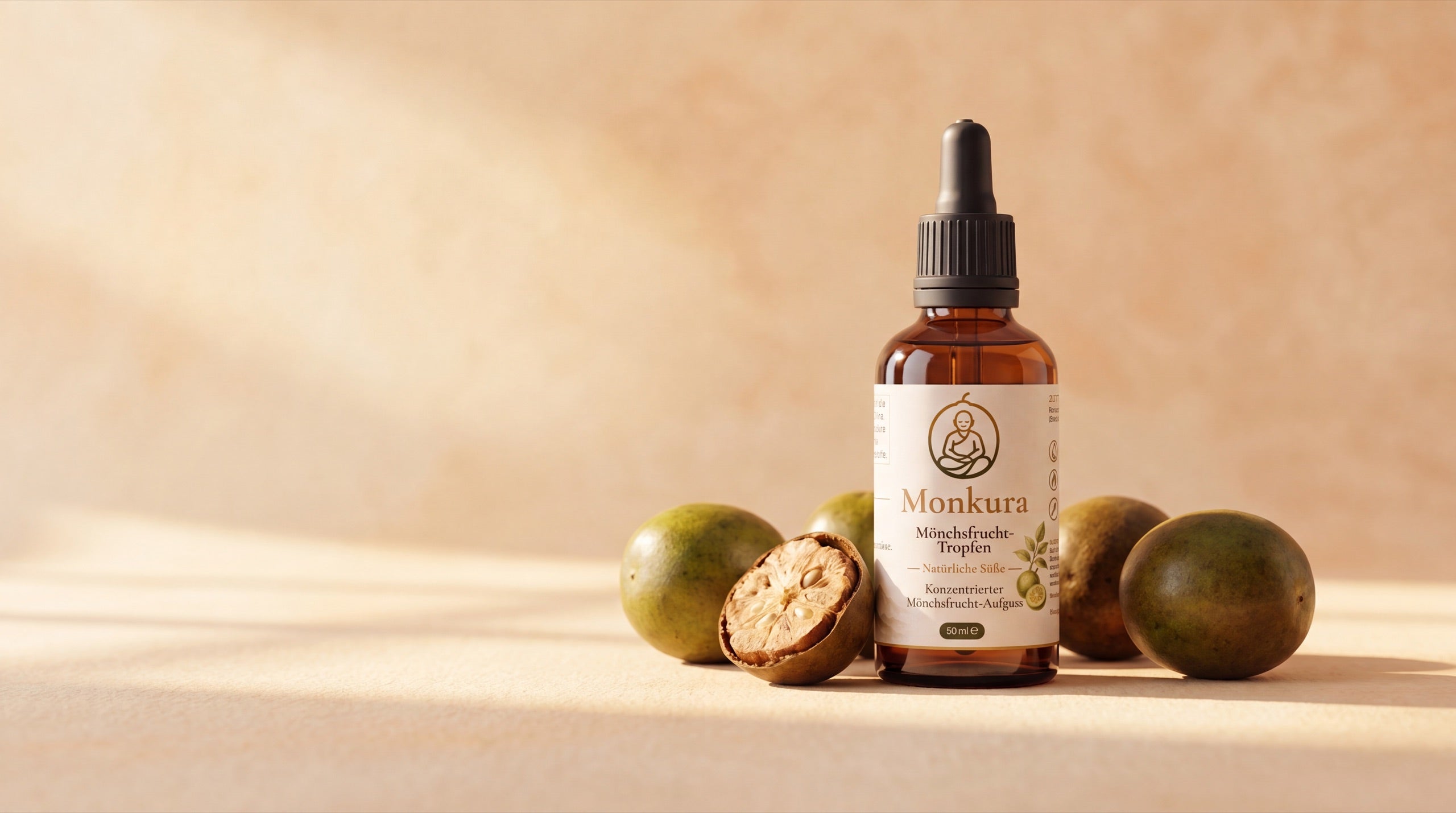
Frische Mönchsfrucht an der Ranke

Monk fruit, what is that?

Monk fruit, also known as Luo Han Guo, is a small fruit from the mountains of southern China that has been used in Asian cooking for centuries. Its sweetness does not come from sugar but from mogrosides: natural fruit compounds that make monk fruit noticeably sweeter than sugar. That is why a few drops are all you need to sweeten your day.

In this part of the world it is still barely known. Not because there is anything wrong with it, but because other sweeteners shaped the market first. Monkura is changing that.

  • One ingredient

    100% monk fruit infusion. No fillers, no preservatives, no flavourings.

  • Approx. 1 kcal per serving

    Six drops are enough. The sweetness stays, and virtually nothing else.

  • Deliberately minimal

    Amber glass instead of plastic, a dropper instead of guesswork. Made to last.

The difference

Why Monkura?

The natural alternative.

Stevia, Erythrit & Co.
Monkura
Geschmack
Stevia, Erythrit & Co.Bitterer Nachgeschmack · lakritzartig · metallisch-übersüß
MonkuraDie einzigartige Süße der Mönchsfrucht.
Körpergefühl
Stevia, Erythrit & Co.Unangenehme Kühle auf der Zunge · abführend · Magenbeschwerden
MonkuraKeine Zuckeralkohole, kein kühlendes Mundgefühl.
Zutatenliste
Stevia, Erythrit & Co.Vorne Stevia, hinten Maltodextrin, Erythrit, Füllstoffe
MonkuraEin natürlicher Inhaltsstoff.
Kalorien
Stevia, Erythrit & Co.Zucker, Honig & Sirup: rund 20 kcal pro Teelöffel
MonkuraCa. 1 kcal pro Portion (6 Tropfen).
Zuckerlogik
Stevia, Erythrit & Co.Honig, Agave, Ahornsirup: klingt natürlich, trotzdem Zucker
MonkuraNatürliche, fruchtbasierte Süße.

One ingredient

100% monk fruit infusion. Nothing else.

Natural sweetness

From the fruit's mogrosides. No stevia, no erythritol.

Made in Germany

Carefully bottled to HACCP standards.

A few drops are enough

Around 170 servings per bottle, approx. 1 kcal per serving.

Cani & Stefano.

The founders

Cani & Stefano.

Who are we?
Two brothers who have spent years deep in the world of nutrition, looking for products that keep their promises. Transparent, natural and without hidden ingredients.

Why did we start Monkura?
Monk fruit has been known in Asia for centuries. Here, hardly at all. Yet it is as natural as it gets. We believe it can fundamentally change the way we sweeten. Monkura is our first step.

Why is Monkura for you?
For everyone who eats mindfully and does not want to give up sweetness.

Cani & Stefano, 2026

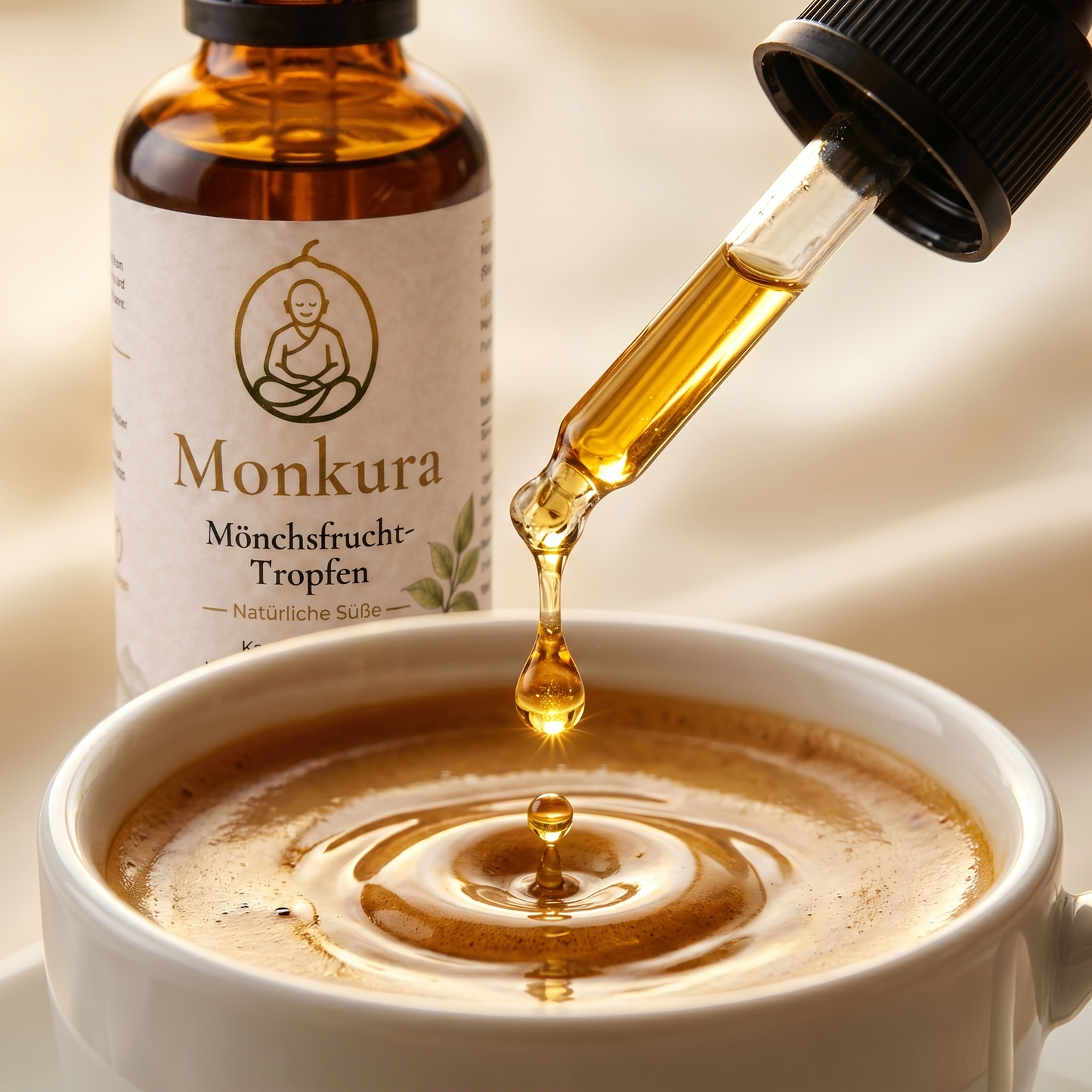
Monkura drops in coffee

How it works

This simple.
No effort.
A real difference.

Just add it
A few drops in coffee, tea, yogurt or porridge. Done.
Wait a moment
The sweetness fully unfolds after a few seconds. Stir. Taste. Add more if needed.
Enjoy every day
No regrets. No ingredient puzzles. No second-guessing. Less sugar, with the same moment of pleasure.
Great in
Coffeeteayogurtporridgedrinksdessertsbakingdressings & sauces

Dosierung

So dosierst du Monkura

Tropfenweise dosieren, umrühren, abschmecken. Weniger ist mehr. Du kannst jederzeit nachtropfen.

Anwendung Empfehlung Hinweis
Coffee 2 to 4 drops Per cup, after brewing
Tea 2 to 4 drops Per cup, ideal for herbal and fruit teas
Yogurt & quark 4 to 6 drops Per 150 g serving, stir well
Baking 15 to 20 drops Per tray or cake tin, heat-stable

Alle Angaben sind Richtwerte. Die ideale Dosierung ist Geschmackssache.

Good to know

Frequently asked questions

What is monk fruit?

Monk fruit (Luo Han Guo, botanically Siraitia grosvenorii) is a small fruit from the mountain regions of southern China. It has been grown there for centuries and owes its name to the Buddhist monks who once cultivated it. Its sweetness comes from mogrosides, the fruit's natural compounds. For Monkura, the fruit is infused with pure water and concentrated. That is all that happens.

What does Monkura taste like?

Pleasantly sweet with a light, fruity caramel note. Unlike many alternatives, pure monk fruit has no bitter or metallic aftertaste. Stirred into coffee, tea or yogurt, it simply tastes like rounded sweetness without masking the flavour of your food.

How do I dose the drops?

Start with 2 drops, stir briefly and wait about 15 seconds, as the sweetness unfolds with a slight delay. Then add more to taste. One serving is approx. 6 drops. As a guide: coffee and tea 2 to 4 drops per cup, yogurt and quark 4 to 6 drops per 150 g serving, baking 15 to 20 drops per cake tin. The drops are heat-stable and well suited for baking.